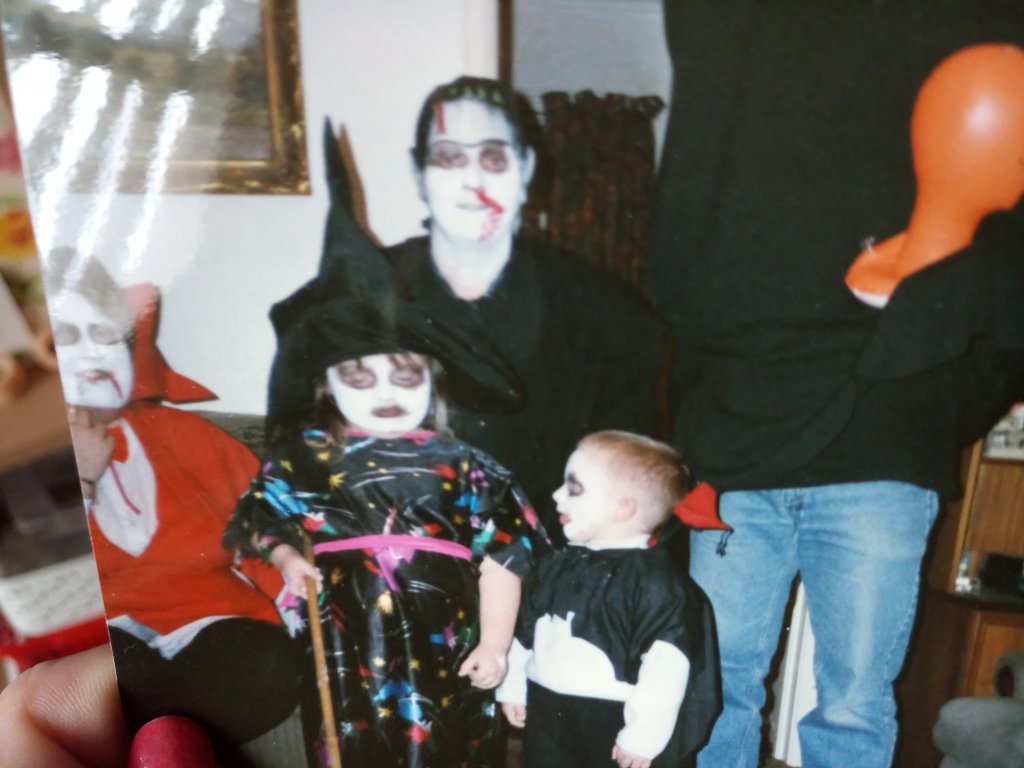
I remember my childhood celebrations of Samhain involving dressing up a trick-or-treating on 31st October and for showing reverence to the dead on 1st November. Of course, I didn’t know any dead people, but I distinctly remember being told stories of the family members beyond my memory and it feeling like a celebration of lives lived. For this post, I’ll be exploring, investigating and reconnecting with my roots from growing up in Northern Ireland.
Childhood Folklore
My identity always feels quite complex. For those that know anything about the conflict in Northern Ireland, you’ll know how contentious identity can be. My family were – are – staunchly British. Despite this, I remember always being surrounded by Irish folklore. I grew up looking for fairies in overgrown lanes, building fairy displays, looking for signs of merrows and selkies on the beaches, and being compared to a banshee if I was too loud. I remember my grandparents reading me stories of folklore after scoffing cheese on toast and hot chocolate.
I think being immersed in these stories has certainly shaped who I am as an adult. Perhaps I repressed it for a long time, but I’ve become more interested in connecting with my roots in the past year or so. Maybe it’s because I’ve been away from home for so long. With the veil between worlds thinning, I thought it was a fitting time to explore my cultural background and how my familial links have led me to where I am now.
This background of being told fantastical stories has always had me interested in witchcraft. I remember getting a stern telling off from my mum for copying sigils from Sleepy Hollow onto my bedroom carpet with chalk. I vividly recall using my folklore books to summon fairies. I don’t think I’m the only person who made potions in the bath or the kitchen from anything I could get my hands on. I very literally interpreted the “magic cream” my mum used for scraped knees as containing literal magical essence and trying to make a magic wand with it. We had a great aunt who lived in a cottage without running water or electricity and no visit would be completed without running around the cottage garden looking for fairies and collecting fruit for my mum to make pies and crumbles with when we went home.
I’ve been living away from home for several years now, and whilst I was never interested in my heritage living at home, I’ve found myself with a deepened desire to connect with this in recent years. Perhaps it’s my way of coping with homesickness – maybe it’s just getting older. It’s this desire for connection that has been steering my practice with witchcraft for wellness – engaging with tradition but in a way that matches with my current values.
Rediscovering My Roots
My grandfather moved out of his home a while ago and we spent some time clearing out his belongings – trinkets and treasures collected over decades. I took a few trinkets, but some of my favourite things were books.
I found a witchcraft book – probably something an aunt made – typed up with a typewriter on yellowing paper and held together with treasury tags. I found battered fairytale books with notes written on the front and weathered pages and bindings. Whilst I have newer books in my personal library, there is nothing I value more than a book with a story beyond the printed words. Having these little pieces of history in my home have definitely helped with the homesickness and made me feel more connected to my roots.

They’ve also helped me understand where my interests come from, how I’ve been shaped by my childhood experiences and little family traditions and tales and how I want to carry this influence forward. For the longest time, I think I fought to become my own person – but we’re inextricably linked to these influences and cannot fully escape them or stop them from shaping us in any way. However, I can control how I use these influences and respond to them.
I also found art pieces painted by family members, crafts and trinkets they’ve collected. They may seem trivial and some may have chosen to throw them away. But I couldn’t help but think that these objects were important to someone before me, someone took the time to make these things and I couldn’t see them tossed away. I began to wonder about what I’ll leave behind for people to find after my time in this realm has passed. I hope someone will appreciate the things I’ve left behind, that I’ve created, or have some fond connection to these things and discover something about themselves through connecting with my objects, journals and art.
As we close out on Samhain celebrations, I’ve taken some time to be thankful for the experiences I’ve been provided by my family; to remember how people have shaped me; to consider how I can bring these influences into my life going forward in a positive way. I’ve lit my candles, I’ve cleared the air with incense and shared memories of my childhood with friends. Remembrance shouldn’t just be about nostalgia, but I think it’s an important tool to guide you forward in life. I’ve really enjoyed understanding more about where my interests have come from and considering where they might go in the future.
Simple Ways to Engage With Your Ancestors
If you’re looking for some ways to engage with your ancestors and reflect, here are some suggestions that don’t require a lot of preparation:
- Light a Candle: Place it in your window to welcome ancestors’ spirits. Speak your intentions as you light the candle or focus on the flame as you reflect on stories.
- Share Stories: Reflect on stories from your family history. If you can, share them with others. I believe that you keep someone alive just from speaking about them – that nobody is really gone until we stop discussing them. It doesn’t even have to be someone who has passed – just sharing memories of your past is a great way to connect.
- Prepare an Offering: Leave a small meal or token as an offering. You could place something small on a altar or set another place at the dinner table, showing that those before you have a seat at the table still.
- Visit a Special Place: If possible, visit a location with ancestral significance, or simply take a walk in nature to reflect on your roots. It could be a burial ground, it could be somewhere you used to go as a child. For me, this isn’t possible all the time, but I do have quiet spots I can go to for reflection in nature.
- Write Something: Write a letter to someone you miss – it could be thankful, it could be frustrated. Express those emotions! You could journal your reflections, write a poem, a short story. There aren’t really any limits! You can bury your writing, burn it, keep it.
These simple ideas help provide moments for reflection and reverence without requiring extensive preparation.

I’d love to hear about how others are connecting with their roots or honouring their heritage this season – how do you keep your connections alive?

 The Opaque Elephant
Leave a comment