
I love hibernating in the winter. I love being cosy, I love lighting a scented candle or popping a simmer pot on the stove, drinking hot chocolate, and smothering myself with blankets. I think a lot of people find themselves wanting to stay indoors more, especially when the weather isn’t on our sides. It could be the perfect time to become rather slovenly, but I try to re-establish balance by using it as a time of reflection and to start thinking about how life is going and how I want it to look in the future.
This can take many forms, but one of the most obvious ways to engage with reflection is to journal. It can be a really powerful tool that offers us insight into ourselves, our lives, and the future we want to create for ourselves. Sometimes it can be difficult to get started, or know what to write about, but when the weather outside is frightful, we can take it as an opportunity to delve into ourselves.

Getting Started With Wellness Journalling
I think part of the apprehension in journalling can come from being overwhelmed by the different ways we can present it. I think many of us get tied up in the videos of beautifully presented journals and scrapbooks we can see online, and this can be off-putting.
Whilst I believe it can be helpful to stick to a habit if you have a lovely journal to write in – I’m personally very fussy about the texture of paper against my skin as I write – I think making it too much of a project can lead us quickly to a state of freeze. You really don’t need anything more than a notebook and a pen or pencil to get started.
When I first started journaling, I tried to write every day, to follow a set format and always write in prose. This is great if it works for you! However, I’ve found it much more useful to move over to a different style – if you could even call it a style. I use a blank-paged sketch book now, which feels less formal to me than using a lined notebook. I write in a combination of prose and fragments, I add doodles and paintings, silly slaps of colour. I find it quite freeing to have no hard-and-fast rules about how to present my journal, to not worry about it being aesthetically pleasing, to toss grammar and rules to the side.
What to Write About:
After realising you don’t need to follow any rules, you have the beauty of the blank page before you. Whilst beautiful, this can also feel a bit overwhelming! Sometimes, topics can be obvious, especially if there are big events going on in your life. You can jot them down and explore your feelings, express your anger, or just recount the facts of the event.
Sometimes, however, it’s useful to have questions to get you started on your journal. You don’t need to stick to these, but they can help you begin the necessary conversations with yourself.
Winter is the slow period, clearing out the old in preparation for the new; the darkness can illuminate different facets of our lives. There are, supposedly, eight recognised areas that contribute to our general wellness. I’ve tried to categorise prompts based on this, but they may overlap with one another.
| Area | Prompts |
| Physical – Looking after your body. | How has my body changed through the year? How does my body feel at the moment? How have I been sleeping recently? What physical activities have I always wanted to try? Have I been nourishing my body correctly? |
| Intellectual – Being curious; expanding knowledge | What skill would I most love to master? What is the most interesting thing I’ve learnt recently? What were the last ten things I looked up? When was the last time I felt inspired? What was a problem I managed to solve this year? |
| Emotional – Engaging with your feelings and the feelings of others | What emotion(s) am I currently feeling? How have the darker days been impacting my mood? How can I be kinder to myself this winter? What has been stressing me out recently? When was the last time I felt at peace. |
| Social – Maintaining healthy relationships; being part of a community | Which social engagements am I most looking forward to? Which social engagements am I least looking forward to? Which person do I admire most at the moment? How have I shown my appreciation for people recently? When was the last time someone crossed a boundary for me? |
| Spiritual – Finding purpose; understanding and engaging with your beliefs and values | What are my most important values? Have my values changed over the year? How do I currently demonstrate my values in everyday life? What is giving my life purpose at the moment? How do I allow myself to connect with higher powers? How do I allow myself to connect with higher powers? |
| Vocational – sharing your skills and gifts; finding personal satisfaction in your work | What is my current work-life balance like? Do I find my job fulfilling? What would my dream career look like? When was the last time I felt proud at work? What gifts do I have to share with the world? |
| Financial – Living within your means; being financially prepared | What is one thing I’d love to buy for myself? Do my spending habits reflect my core values? How do I feel about my current financial situation? What will be my biggest expenses over the next month? What things do I think are a waste of money? |
| Environmental – Committing to making the planet healthier; understanding how your environments (natural, built, and social) impact you | How do I feel about my current living space? How have I engaged with nature recently? Where do I feel safest? How can I make better choices for the environment? What would an ideal home environment look like to me? |
Developing Your Answers
Although some of these questions are rather closed, they are meant to be a starting point for you to develop your answers. During my time as a teacher, I learnt a bit about developing ideas and asking questions:
- Consider stretching yourself with further questions using a question matrix. They can provide incredibly useful prompts for adding depth to your understanding of anything.
- I used to always tell me students to ask “Why?” when analysing anything: Why does it matter? Why use this word? Why does it make me feel that way? Why does the author want us to feel this way? Why not use a different word? I think this is a really useful tactic for delving deeper into your subconscious.
- I’ve written about free-writing previously, and some of the tips there may be useful! I’ve also written about Maslow’s understanding of needs, which may make for interesting further reading and inform your question formulation.
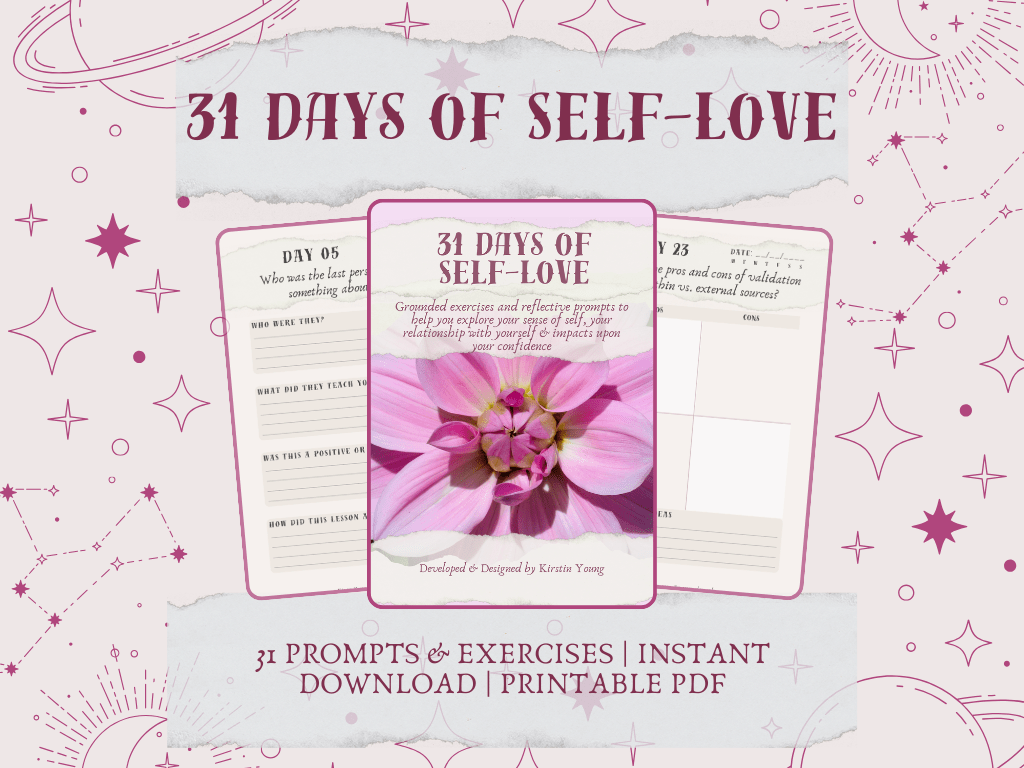
If you want a more structured approach to writing, you may be interested in my wellness workbooks available via Ko-Fi and Etsy for digital download.



So, in summary, my top tips for journaling are:
- Keep it simple – a notebook and writing tool will suffice; of course, you can get as creative as you want!
- No rules necessary – don’t worry about grammar, punctuation, or presentation.
- Start with a question – just get an idea down! We have to start somewhere.
- Add depth – Ask yourself follow up questions to develop your understanding.
I hope these prompts have been helpful! I’d love to hear any of your journaling tips, or to see how you decorate your journals.


 The Opaque Elephant
Leave a reply to 4 Tips for Creating a Cosy Home Environment Full of Self-Love – The Opaque Elephant Cancel reply