
The theme for this month is new beginnings, and with that comes a lot of intention-setting, clearing away old energies, and looking to the future. I think it’s really important to understand yourself in order to set suitable intentions and goals, and I think it can be useful to examine what motivates you.
Over the past few years, I’ve been working on developing my emotional literacy to improve my sense of self-awareness. I’d like to consider this through the lens of new beginnings and share some insights from my own personal growth journey.

Emotional Growth and New Beginnings
Whilst setting goals for ourselves, or wanting to change is admirable, I think we need to understand where we’re coming from to really begin to develop. Understanding your emotions can help with emotional growth, and enables us to examine what’s holding us back or what is driving our desire to move forward. Without engaging with your emotions and motivations, you can unwittingly be setting yourself up for failure.
Of course, as always, I’m not a therapist or doctor. This advice is a reflection of my own experiences and what has worked for me, and should never be considered as medical advice or an alternative to medical assistance from a professional.
Differences Between Emotions and Feelings
“Emotions” and “feelings” are often used interchangeably, and they are very closely related. For the purpose of clarity, this blog post is working on the understanding that:
- Emotions are our gut response. We have no control over the emotion that arises.
- Feelings are how these emotions manifest. This could be crying when sad, that knot in your stomach when you’re nervous, or heart palpitations when you’re angry. It could also be a mental interpretation, like feeling frustrated or relieved.
For further information, I’d recommend exploring this article from Psychology Today.
Methods for Understanding Your Emotions
Now that we’ve got the basics out of the way, I’d like to explore five ways that you can explore and understand your emotions.
1. Develop the Vocabulary to Talk About Your Emotions
The six basic human emotions are fear, anger, disgust, sadness, happiness, and surprise. Starting from there, we can work our way out into more specific – and accurate – descriptors of our emotions. Some psychologists also add a general “bad” emotion to this mix. One way to expand our vocabulary is through emotion wheels.
I first started using emotion wheels as a teacher when encouraging students to expand their vocabulary when designing characters. However, they can be incredibly useful in identifying our own emotions. I particularly enjoyed this wheel, comprising of seven different emotions, and gradually spanning out to help you develop the vocabulary to pinpoint the emotion you are feeling.

2. Understand Where Those Emotions Are Coming From
Once you’re able to pinpoint the emotion you’re feeling, you should work to identify where that emotion stems from. What event has happened that makes you feel this way?
You should aim to connect it to something concrete. This allows you to identify different situations and the emotions they cause. This helps foster an understanding with yourself, and to be aware of situations that either bring you happiness, or make you feel uncomfortable.
Emotions are typically caused by people, situations, memories, or important dates. They may also be more general – a scene in a film or TV show, a song, a smell, or eating something.
3. Exercise Compassion for Yourself
Recognise that you don’t have control over your emotions! You have some control over your feelings and your responses to these emotions, but you cannot control your subconscious reactions.
I think many people focus on ignoring or supressing “negative” emotions, and this in turn can create a sense of shame. You’re allowed to feel happy, sad, or disgusted by something. Give yourself the space to feel these emotions, and recognise that they are natural – even if unwanted.
Once you allow yourself to feel the entire range of human emotions, you are able to work on your reactions to them with greater freedom.
4. Engage in Reflection
Developing past identifying the what, you should start to think about the why. Why did that interaction, song, or date stir the emotion you have identified?
I find that it’s also helpful to reflect on how your body reacts to the emotion after you’ve identified it. If something causes me to feel envious, for example, I can examine that and understand what I feel may be lacking in my life. If something makes me curious, I can understand my motivations. If an action makes me feel isolated, I can better understand my emotional needs in the scope of relationships.
It’s also useful to examine whether it’s an emotion (and by extension, feeling) that I’m comfortable with. When I take the time to understand the roots of my feelings, as caused by an emotion, I can determine whether I want to avoid that feeling, or whether I am at peace with what that emotion may bring.
5. Make a Plan for Emotions in the Future
After I’ve reflected, I think it’s useful to consider how I want to react to the feelings aroused by different emotions in the future, and make plans on how I can change or maintain this.
If something makes me jealous, and I’m able to identify why this is, then I can devise a solution for fulfilling the unmet need. If I feel valued because of an interaction, I can understand what helps me devise my sense of self, understand what my values are, and come up with ways I can continue embodying these values.
I don’t want to pretend that this is easy work – it takes a long time to truly be in tune with your emotions. I still experience feelings and reactions I don’t want to, but I find it helpful to follow the steps I’ve shared in order to understand them. My self-care journey has been long, and I don’t think it will ever truly be complete. It just gets easier the more I engage with reflection, mindfulness, compassion and understanding.
Becoming more emotionally literate has helped me understand my aspirations, and I’m now living a much more fulfilling life by making my aspirations align with my emotions, rather than what I’m supposed to do.
I hope these steps are useful for you. I’d love to hear any advice you have for other people seeking to understand their emotions in more depth, or which of the steps I’ve outlined resonate most with you. Let me know in the comments, or feel free to connect on Facebook, where I share tips frequently!
If you’re looking for structured writing prompts to support your self-discovery, I have several reflective eBooks available via Ko-Fi and Etsy for digital download 🙂

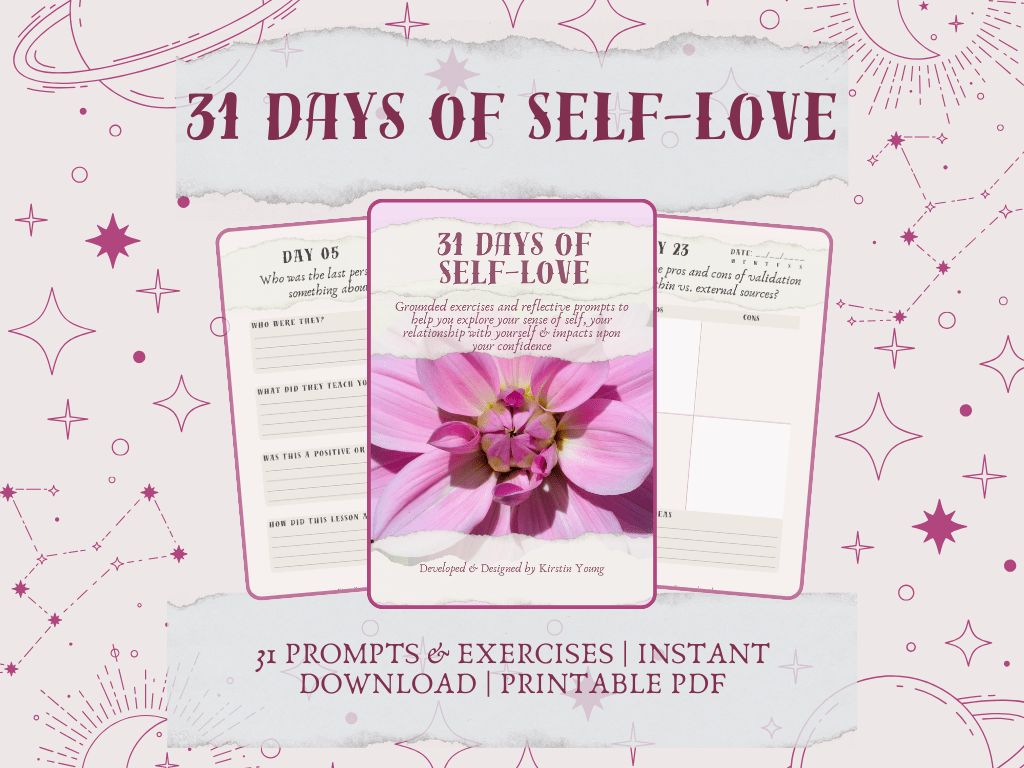

Alternatively, if you find these free resources valuable, I’d really appreciate it if you’re able to support the continuance of this work by making a small donation on Ko-Fi!


 The Opaque Elephant
Leave a reply to How Awakening Fuels Emotional Wellness – The Opaque Elephant Cancel reply